0.36 Kw Solar System Installation In Funyula Busia County, Kenya
Check out our recent 0.36 Kw Hybrid Solar System Installation in Busia County, Kenya
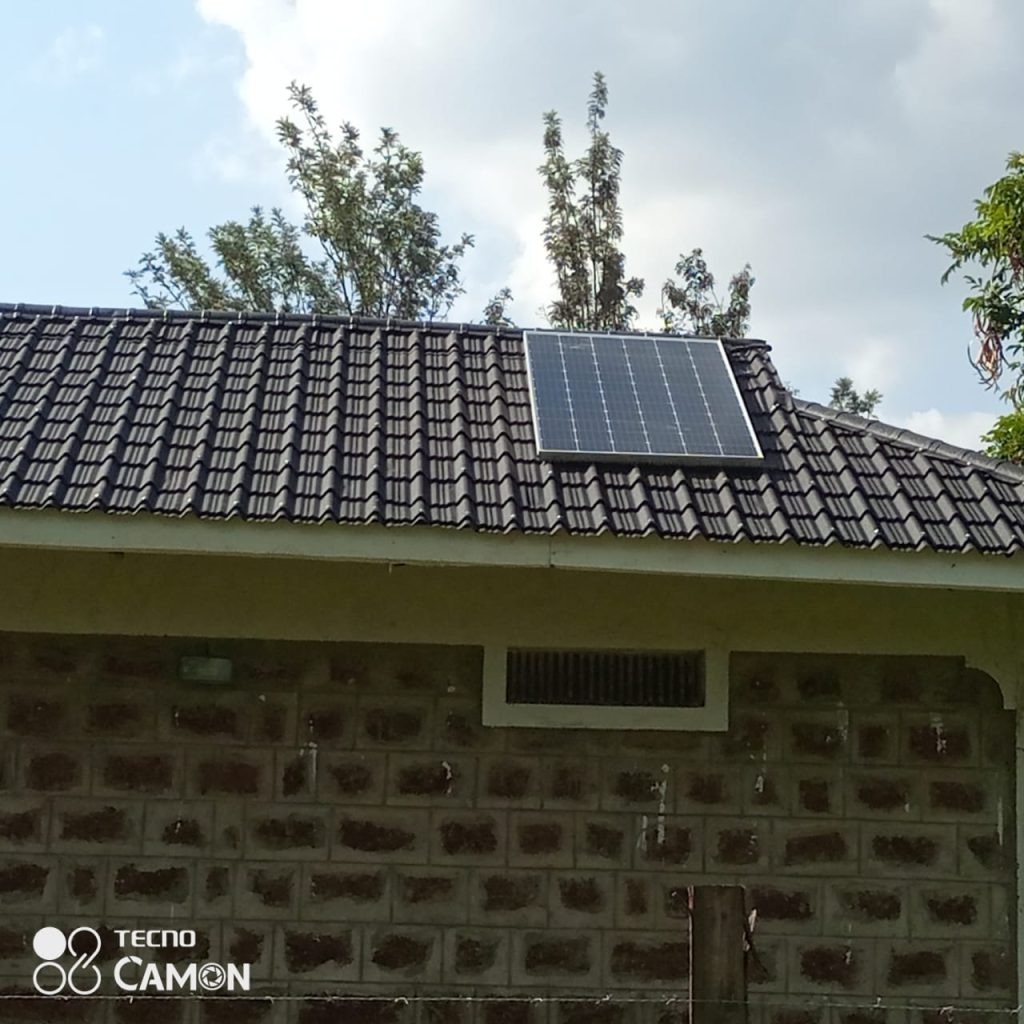

A recent 0.36 Kw Solar System Installation in Busia County, Kenya

Check out our recent 0.36 Kw Hybrid Solar System Installation in Busia County, Kenya
A recent 0.36 Kw Solar System Installation in Busia County, Kenya
Check out our recent 5.76 Kw Hybrid Solar System Installation in Migori County, Kenya
Contact Us For A Solar Quote in Your Area


Say you intend to install a 3Kw solar system but don’t have the full budget for installation upfront.
We always advise our clients to purchase a 3Kw hybrid inverter with foresight of upgrading their system with more panels and batteries for energy storage as funds become available.
This is a concept very similar to pay as you but at your own pace!
You can buy an extra solar panel or battery every 3 or 4 months until you complete building your 3Kw solar system.
If done in this way to avoid wastage of resources then, you don’t have to buy a 1 Kw Hybrid inverter then have to buy another inverter when funds are available for a 2Kw system as you continue to build your system towards your 3Kw solar system goal.
The one time purchase of the 3kw hybrid inverter will save you thousands in solar system upgrade costs.
Get an instant solar quote emailed to you here

Ever heard of a payment plan or layaway? Make payments at your own pace!
A question we always pose to our prospective clients is when was the last time you walked into a new car dealership and bought a vehicle cash?
Most of them replied they have never done so and due to the magnitude of financial commitment, they had to make payments.
With that answer in mind we demonstrated to them how they could afford the packages we offer by buying bits and pieces of the solar system at their pace.

Now that wasn’t so expensive after all was it? That’s the easy way to pay for our solar systems…
Get your FREE solar installation quote by clicking here today
High unpredictable electricity bills are increasingly putting a strain on Kenyans budgets.
The good news is…

The cost of switching to solar in Kenya has dropped significantly in the past several years. A decade ago, an average 1 kilowatt hour residential solar system could cost more than Ksh 1,000,000. Now, the outright cost of a typical home installation ranges from Ksh 300,000 to Ksh 360,000 which is a 64% average decrease.
From the price of hardware to ongoing maintenance, learn more about the cost of home solar.
It’s no secret that the energy costs in Kenya continue to rise to unpalatable levels.
Commercial and residential electricity rates (the amount you pay per kilowatt-hour, or /kWh) have constantly risen across the nation over the last 10 years. This trend is unlikely to be disrupted in the future: oil prices are only likely to increase, and as they do electricity rates will rise.
This cost will obviously be passed down to the consumers by the local power company.
Solar energy benefits businesses, organizations, and property owners in huge ways. Businesses all across Kenya, and the world are taking advantage of everything switching to solar has to offer.
Here’s an article we came across highlighting how high your electricity bill in Kenya could rise.

The Lawyer and Former Governor spend over Ksh 6,000,000 a year in electricity bills. Which is why Switching To Solar in Kenya is the Best Way to Reduce Or Eliminate Your Rising Power Bill.
In conclusion, Solar panels are rapidly spreading over Kenyan rooftops. And as the cost of solar continues to fall, it’s no surprise that residential solar systems are installed every 60 minutes in Kenya.
Residential solar costs are at their lowest in over 30 years. More affordable than ever, today’s residential solar panels feature technology advances that maximize power production. Read more on: How many solar panels will my home in Kenya need?

The growing interest in switching to solar by electricity consumers is gaining momentum at a fast pace.
Hence the need to get Solar Energy Facts From A Leading Solar Panel Company In Kenya that,
focuses on value and quality rather than cheap prices only.
With millions of Kenyans still hoping to be connected to the electricity grid there can only be one option to expedite the process,
Install a solar system on your property and forget paying monthly energy bills for years to come!
Think of this as the same situation Kenya was in before mobile phones.
Not everyone could afford to have a landline phone or, get one even if they had the resources due to their remote locations.
Then came the mobile phones and everyone had an affordable chance to get connected.
Long story short no one talks about getting a landline phone anymore…
Fast forward to today and most people again are either not able to afford getting connected to the electricity grid.
Or are sick and tired of the high power bills and a side of power blackouts from the unreliable energy company.
That should probably rebrand its name to The Power Outage Company with its slogan as “ high power bills for frequent power blackouts”
And now for the good stuff.
Solar power systems derive FREE energy from the sun. Installing efficient solar panels with reliable battery storage systems on your home helps cut or eliminate your electric bill.
Pretty much choosing to put an end surprise power bills, back dated bills, over billing and frequent power blackouts. Here’s How To Reduce Or Eliminate Your Rising Power Bill In Kenya
Read more on Solar Energy Facts From A Leading Solar Panel Company In Kenya by knowing What To Look For When Comparing Solar Panel Prices in Kenya
There are three main types of solar PV and storage systems in Kenya: grid-tied, grid/hybrid and off-grid.
They all have their advantages and disadvantages and it really comes down to the customer’s current energy demand,
And what they want to get out of the system.
Grid-tied system
A grid-tied system is a basic solar installation that uses a standard grid-tied inverter and does not have any battery storage.
This is perfect for customers who are already on the grid and want to add solar to their house.
Grid-tied systems are simple to design and are very cost effective because they have relatively few components.
The main objective of a grid-tied system is to lower your energy bill. Read: How To Reduce Or Eliminate Your Rising Power Bill In Kenya
One disadvantage of this type of system is that when the power goes out, so does your system.
Grid-tied inverters have to automatically disconnect when they don’t sense the grid.
This means that you cannot provide power during an outage or an emergency and you can’t store energy for later use.
Grid-tied system with battery back-up
The next type of system is a grid tied system with battery back-up, otherwise known as a grid-hybrid system.
This type of system is ideal for customers who are already on the grid who know that they want to have battery back-up.
Good candidates for this type of system are customers who are prone to power outages in their area,
Or generally just want to be prepared for outages.
With this type of system, you get the best of both worlds because you’re still connected to the grid while also lowering your utility bill.
At the same time, if there’s a power outage you have back up.
Battery based grid-tied systems provide power during an outage and you can store energy for use in an emergency.
You are able to back up essential loads such as lighting and appliances when the power is out.
You can also use energy during peak demand times because you can store the energy in your battery bank for later use.
Read: Here’s Why We Recommend SimpliPhi Batteries to Our Clients In Kenya Switching To Solar
Off-grid systems are great for customers who can’t easily connect to the grid.

This may be because of geographical location or high cost of bringing in the power supply.
Read: Here’s A Green Energy Alternative To Using Generators in Kenya.
In most cases, it doesn’t make much sense for a person connected to the grid to completely disconnect and do an off-grid system.
The benefits of an off grid system is that a person can become energy self-sufficient and can power remote places away from the grid.
You also have fixed energy costs and won’t be getting a bill from your energy use.
Another neat aspect of off grid systems is that they are modular and you can increase the capacity as your energy needs grow.
You can start out with a small, budget-conscious system and add on over time.